Solution For: Indonesia’s Electricity Production Surpasses 165,51 TWh, Breakdown Revealed
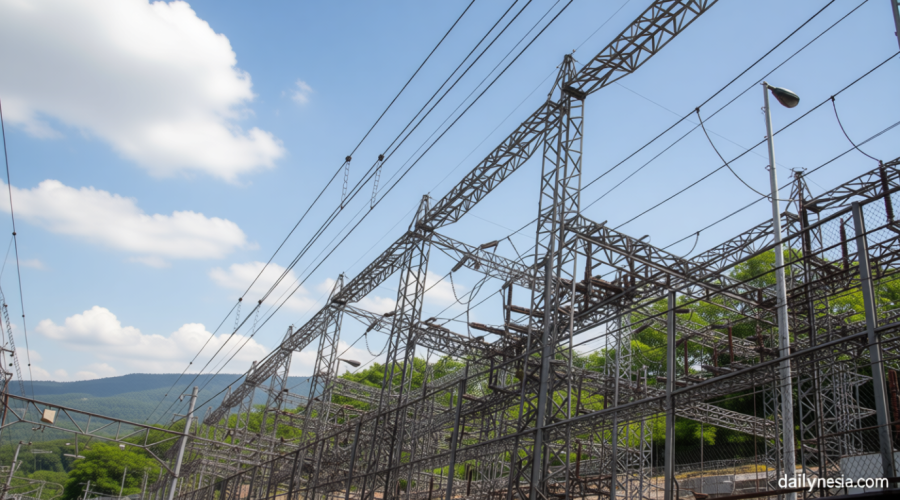
Dailynesia.com – In a significant development, Indonesia’s electricity production reached a new milestone in April 2026, surpassing 165,51 terawatt hours (TWh) for the first time. The data was presented by Tri Winarno, Plt Director General of Electricity at the Ministry of Energy and Mineral Resources (ESDM), during a discussion session with the DPR RI’s Commission XII on June 4, 2026. This achievement marks a crucial step in the country’s efforts to diversify its energy sources and meet growing demand across various sectors.
Breakdown of Electricity Production Sources
The total production of 165,51 TWh was generated through a combination of state-owned and private power plants. According to the report, state-owned enterprises like PLN (Perusahaan Listrik Negara) contributed the most, accounting for 61.79 TWh. Independent Power Producers (IPP) followed closely with 55.03 TWh, while other entities such as Wilus and IUPTKS added 40.29 TWh and 8.40 TWh respectively. This distribution highlights the collaborative effort between government and private sectors in maintaining a stable energy supply.
“The growth in renewable energy sources (EBT) has exceeded expectations, with a significant increase that aligns with the national target for 2025,” stated Tri Winarno. “This trend underscores the government’s commitment to reducing reliance on fossil fuels and fostering sustainable energy solutions.” The emphasis on EBT, which comprises 17.89% of the total output, reflects a strategic shift towards cleaner energy to support long-term environmental goals.
Energy Mix and Fuel Contributions
Of the 165,51 TWh produced, coal-fired power plants remained the dominant source, contributing 107.36 TWh or 64.87% of the total. This underscores the continued reliance on traditional energy sources despite the push for greener alternatives. Natural gas plants accounted for 22.94 TWh, or 13.86% of the output, while renewable sources like solar, wind, and hydroelectric power generated 29.62 TWh, representing 17.89% of the total. The remaining 5.59 TWh, or 3.38%, came from oil-based power plants.
Tri Winarno highlighted that the energy mix has been gradually evolving, with renewable energy sources gaining traction. The government has set a target to increase EBT’s share in the energy sector, and the data from April 2026 demonstrates progress toward that goal. However, the dominance of coal still poses challenges in terms of carbon emissions and environmental sustainability.
Looking ahead, the Ministry of Energy and Mineral Resources has outlined plans to further integrate renewable energy into the national grid. These initiatives aim to address energy security concerns, reduce the environmental impact of power generation, and support Indonesia’s climate commitments. The success of the current production levels is seen as a foundation for these future strategies, ensuring that the country remains on track to achieve its renewable energy targets.
The increase in EBT production is attributed to several factors, including government incentives, advancements in renewable technology, and increased public awareness of environmental issues. Despite these efforts, the expansion of renewable energy faces hurdles such as high initial costs and the need for infrastructure development. Nonetheless, the positive trend observed in April 2026 offers hope for a more sustainable energy landscape in the coming years.