Key Issue: Anwar Ibrahim’s Leadership in Malaysia Faces Defection Threat
Internal Divisions Challenge PM’s Stability
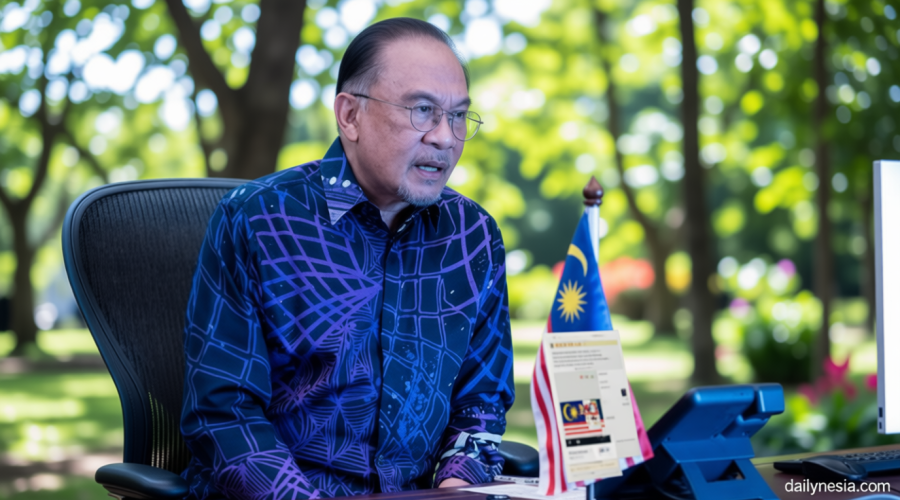
Dailynesia.com – The leadership of Malaysia’s Prime Minister Anwar Ibrahim is under increasing scrutiny as key members of his inner circle, including former ministers, begin to defect to rival parties. This development has sparked concerns about the integrity of his coalition, which has been a cornerstone of his administration since November 2022. The defection of figures like Rafizi Ramli, once seen as a potential successor, signals a shift in the political landscape that could destabilize the ruling alliance. With the possibility of an early general election looming, the erosion of party loyalty has raised questions about Anwar’s ability to maintain control and address pressing national issues.
Defection Dynamics and Legal Implications
The defection of PKR members has gained momentum, with reports indicating that over 18,000 individuals have joined the newly formed Bersama party, which operates under the banner of Malaysia United Party. A significant portion of these members, approximately 6,000, were former PKR supporters. While many of them are grassroots members or local office holders, their departure has deepened the anxiety surrounding Anwar’s political stability. Malaysian law prohibits lawmakers from switching parties while in office, meaning the defection could force the government to expedite elections before the 2028 deadline. This situation highlights the fragility of the coalition, which has relied on cross-party alliances to secure majority support.
Leadership Concerns and Public Perception
“Despite remaining loyal to PKR, the party is now wounded, hurt, and suffering critical damage,” remarked Hassan Abdul Karim, a PKR MP and Anwar’s ardent supporter. Hassan emphasized that the defection could weaken the party’s appeal to young voters, swing electorates, and groups prioritizing economic reforms. He warned that if more PKR lawmakers who backed Rafizi Ramli leave the party, Anwar’s legitimacy as a leader might be undermined. This sentiment reflects growing public skepticism about the government’s ability to deliver on its promises, particularly in tackling corruption and accelerating institutional reforms.
PKR’s Response and Internal Reckoning
PKR’s Secretary-General, Fuziah Salleh, who also holds the position of deputy minister, has attempted to downplay the scale of the defection. “There has been no mass exodus of PKR members joining Bersama,” she insisted. However, the party’s spokesperson, Fahmi Fadzil, noted that 5,000 individuals have joined Bersama in the past two months, pushing PKR’s total membership past one million. While this demonstrates the party’s resilience, it also underscores the challenges Anwar faces in retaining key allies. Fuziah’s comments suggest a strategy to balance internal criticism with public reassurance, as the party seeks to maintain its relevance amid shifting political tides.
Historical Context and Electoral Strategy
The current crisis echoes past challenges faced by Anwar Ibrahim, who has long been a central figure in Malaysia’s opposition movement. His transition to the government in 2022 marked a significant shift, but the defection of trusted colleagues raises concerns about his leadership’s effectiveness. Analysts suggest that the defection may be part of a broader effort by opposition parties to capitalize on Anwar’s perceived vulnerabilities. The timing of the defection, coinciding with speculation about an early election, highlights the strategic importance of maintaining party cohesion. If the coalition fractures further, the government’s majority in Parliament could be jeopardized, forcing Anwar to confront the consequences of his leadership choices.
Broader Implications for Malaysian Politics
Key Issue: The defection of PKR members is not merely a party internal matter but a reflection of deeper political tensions in Malaysia. This event could influence voter behavior in the upcoming elections, as disillusioned members bring their base with them. The formation of Bersama signals a potential realignment of political power, with the new party positioning itself as a challenger to the existing government. The implications of this shift extend beyond Anwar’s personal leadership, affecting the stability of the coalition and the trajectory of Malaysia’s political future. As the situation unfolds, the focus will remain on how Anwar navigates this crisis to preserve his leadership and the government’s mandate.