Announced: Mentan Pastikan Ketahanan Pangan Indonesia Kuat Menghadapi Perang Iran-AS
Dailynesia.com – Announced in April 2026, the Indonesian government revealed that national rice reserves have reached an all-time high, reinforcing the country’s ability to maintain food security amid global uncertainties, including the ongoing conflict between Iran and the United States. This achievement is part of a broader strategy to ensure self-sufficiency in key agricultural products, as highlighted by Menteri Pertanian, Andi Amran Sulaiman. The surge in rice stocks reflects the government’s commitment to strengthening domestic production and distribution systems, which are critical for safeguarding the nation’s food supply chain.
Strategi Penguatan Regulasi dan Kebijakan
The announced initiatives are closely aligned with President Prabowo Subianto’s vision for agricultural reform. These policies aim to streamline regulations that have historically hindered farmers’ access to essential resources like subsidized fertilizers, efficient irrigation through pompanisasi systems, and high-quality seeds. Additionally, the government has prioritized the adoption of modern agricultural technology to boost productivity. By announced improvements in these areas, the ministry seeks to address long-standing challenges that have threatened the sustainability of food production.
“Stok beras nasional menunjukkan hasil dari kebijakan yang di announced, khususnya dalam meningkatkan kapasitas produksi pangan,” terang Mentan Amran Sulaiman dalam wawancara terbaru.
Kebutuhan Komoditas Swasembada
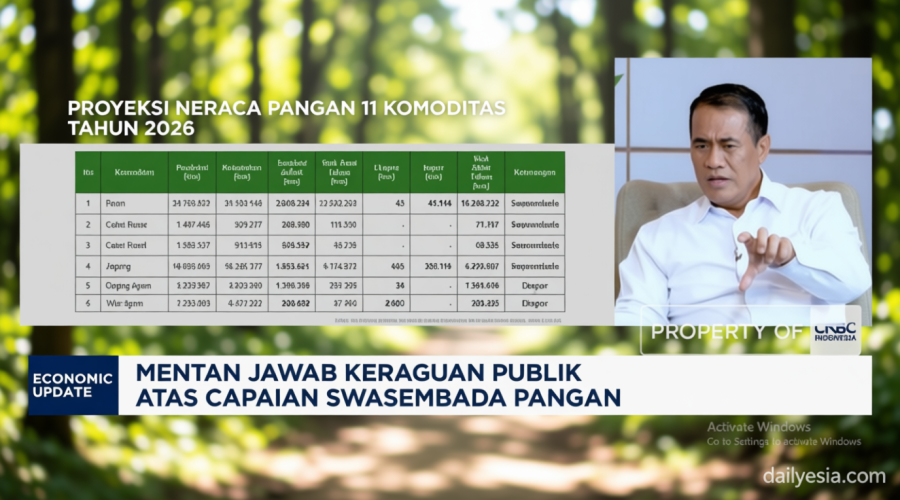
The announced program, which was formalized through Inpres No. 125/2022, targets 11 core agricultural commodities to ensure self-sufficiency. As of 2026, eight of these, including beras, jagung, and bawang merah, have successfully met the swasembada goals. The remaining three—daging, kedelai, and bawang putih—require targeted interventions. The announced efforts to address these gaps involve expanding domestic production, improving import mechanisms, and strengthening monitoring to prevent market distortions that could jeopardize food security.
Announced through multi-agency collaboration, these strategies emphasize both short-term solutions and long-term planning. For instance, the government has allocated additional funds to support smallholder farmers, who are vital to maintaining stable output in staple crops. Furthermore, the announced initiatives include training programs for agricultural workers and investments in infrastructure to reduce post-harvest losses.
Langkah Strategis dalam Menghadapi Ketidakstabilan Global
The announced focus on food security is especially crucial as the Iran-AS conflict escalates, potentially disrupting global trade routes and commodity prices. Indonesia’s position as a major rice exporter and importer of other staples has made it a key player in regional and international food markets. To counter potential shocks, the government has announced contingency plans to accelerate domestic production and diversify supply sources. These measures are designed to minimize reliance on external factors and ensure resilience in the face of geopolitical tensions.
“Ketahanan pangan Indonesia bukan hanya tentang stok, tapi juga kapasitas untuk memproduksi dan mendistribusikan pangan secara cepat dan efisien,” tegas Mentan Amran Sulaiman saat diwawancara oleh CNBC Indonesia.
Announced in the context of rising inflation and supply chain disruptions, the ministry has also launched initiatives to support small-scale farmers through financial incentives and technical assistance. These steps are part of a comprehensive approach to strengthen the agricultural sector, which is the backbone of Indonesia’s economy and social stability. By announced policies that prioritize rural development, the government aims to create a self-reliant food system capable of withstanding external pressures.